Full Mouth Dental Implants for Bottom Teeth Replacement
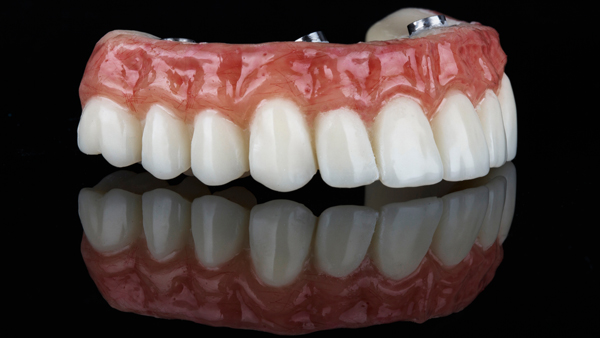
Full mouth dental implants are typically recommended to people who have lost most of their teeth on one dental arch. It combines implants with dentures, providing a more affordable option than replacing all the missing teeth with implants.
Dentures are more affordable than implants, but they have a few significant drawbacks. For starters, bottom sets of dentures tend to have the worst stability and are prone to shifting while being worn. This leads to various issues like difficulty speaking and sore spots forming due to the appliance's framework rubbing against soft tissues in the mouth. However, attaching dentures to implants, as is the case with implant-supported dentures, makes them virtually as stable as natural teeth.
Replacing your missing teeth with full mouth dental implants
An implant is typically a titanium screw or rod that is surgically placed in the patient’s jaw. It serves as an artificial root and helps prevent the bone tissue loss that people with missing teeth often deal with. Like muscle tissues, bone tissues need regular stimulation to remain healthy. Losing this stimulation leads to bone tissue atrophy. Missing teeth replacement options like dentures and bridges do not replace lost teeth roots, so they do not protect patients against bone tissue loss.
Eligibility
Getting missing teeth replaced with full mouth dental implants starts with a consultation with a dentist. The placement of implants counts as minor oral surgery, so patients need to be healthy enough to recover from the procedure. Immune system disorders and health issues like diabetes hinder the healing process, as do habits like drinking regularly or using tobacco products.
Diagnostics like X-rays might be used to evaluate the thickness of the patient’s jawbone. Patients who lack the bone density needed to support implants might have to get bone grafts before implants can be placed. The procedure will have to wait until they are fully healed from their graft, which can take up to three months. Patients are evaluated individually to determine if they are healthy enough for implants and if their jawbone is thick enough to hold implants.
The process
Placing implants in a person’s jaw starts with the dentist administering a local anesthetic. Incisions might then be made so the dentist can reach the patient’s jawbone. Holes are made with a dental drill, and four to six implants are inserted in each dental arch being fitted for implant-supported dentures. Temporary dentures might be attached at that point to restore the patient’s smile. These dentures are for aesthetics and do not fully restore the function of the lost teeth.
The implants will fuse with bone tissue holding them in place over the next six months via osseointegration. This turns the implants into part of the patient’s jaw. Once the implants have bonded with the surrounding bone tissues, the temporary dentures are swapped with permanent ones.
Frequently asked questions about full mouth dental implants
Patients who are considering full mouth implants probably have many questions. Here are the answers to a few of the most common questions about full mouth dental implants.
Does insurance cover full mouth dental implants?
Most coverage policies do not cover full mouth dental implants. However, some plans may cover at least a portion of the cost, so it is always worth checking with the insurance company to see if there is any coverage.
What are the risks associated with full mouth dental implants?
As with any surgical process, there are a few risks associated with full mouth dental implants. These include infection, damage to the surrounding teeth, and nerve damage. However, these risks are relatively rare and can usually be avoided with proper care and maintenance.
How do I maintain my full mouth dental implants?
Full mouth dental implants require the same care and maintenance as natural teeth. This includes brushing, flossing, and biannual dental visits. It is essential to avoid hard or chewy foods that can damage the implants. Smokers should consider quitting to reduce the risk of infection.
What is the success rate of full mouth dental implants?
The success rate of full mouth dental implants is high. In most cases, the implants will fuse to the bone and last a lifetime with proper care and maintenance.
Who is eligible for full mouth dental implants?
Most healthy adults are eligible for full mouth dental implants. However, certain medical conditions may make someone ineligible for the procedure, including diabetes, cancer, and autoimmune diseases.
Replace your lost teeth
Give us a call or stop by our Irvine clinic to learn more about implant-supported dentures and other ways to replace missing teeth.
Request an appointment here: https://www.implantdentistirvine.com or call Smile by Design Dental Group at (949) 336-3404 for an appointment in our Irvine office.
Check out what others are saying about our services on Yelp: Read our Yelp reviews.
Related Posts
Dental veneers are quick dental restorations that can renew your smile. Each shell can add another layer of protection to every tooth. Knowing the steps of getting these restorations can help you prepare for your appointments. Here are the details of the process of getting dental veneers.The dentist will decide if the patient is a…
An assessment for dental veneers can tell your dentist if you need these restorations. Veneers are customizable and thin. Each shell can correct mild to moderate dental issues. Here are the details to know when your dentist may suggest dental veneers.Even if other dental restorations can repair these mild types of damage, dental veneers are…
Dental veneers are often more advantageous than other cosmetic dental procedures. Some cosmetic dental procedures are quick but need retreatment. Others need preparation and months to be effective. Veneers take a short time to get but can last for at least a decade with proper care and maintenance. Knowing the benefits of these restorations over…
Dental veneers are porcelain or composite resin shells that fit over the front of the teeth, correcting cosmetic imperfections. Their average lifespan is about ten years. However, taking care of veneers from the start can help them last up to 20 years. This article will discuss what to expect after getting veneers and provide aftercare…